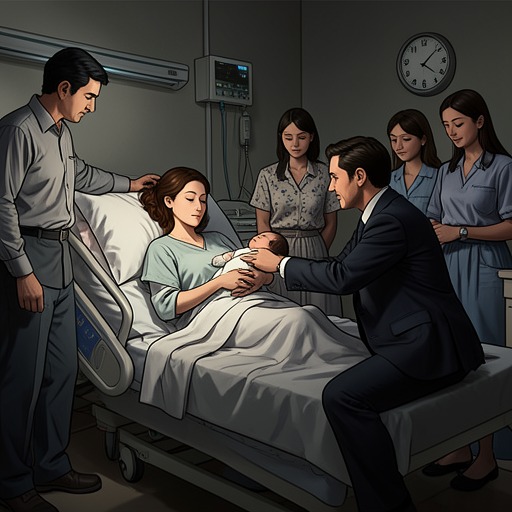
What to Expect When You’re Expecting a Werewolf
How to Flirt with A Naked WerewolfWhat to Expect When You’re Expecting a Werewolf is a hand-typed medical pamphlet that Dr. Moder gives Mo after confirming her pregnancy with Cooper’s child. Its importance lies in the way it turns a frightening biological secret into actionable knowledge: the pregnancy is real, its timetable is unusual, and its risks can be managed through specialized care. The pamphlet is both a comic object and a bridge between human medicine and werewolf custom, allowing Mo to imagine a future that includes prenatal care, childbirth, and a child who may inherit the ability to transform.
Discovery and Purpose
The pamphlet appears when Mo is trying to understand whether her physical symptoms indicate pregnancy and what carrying a werewolf child might involve. Before receiving professional help, she searches the few books available to her and finds very little information about human women carrying werewolf babies. The material she does find is discouragingly sparse, concentrating on shortened gestation periods and overwhelming food cravings. Her uncertainty is intensified by practical fears: whether a doctor could identify the child’s unusual ancestry, whether the pregnancy would be normal, and whether a human hospital could safely handle the birth.
Gracie Graham directs Mo toward Dr. Moder, who works with pregnant women in the werewolf community and helps births appear normal and human for government paperwork. Because Mo does not want the entire small town to learn about the pregnancy before she can tell Cooper, Dr. Moder makes a house call. The private visit preserves Mo’s control over the disclosure while still bringing her into contact with the pack’s medical knowledge.
Medical Information
Dr. Moder is efficient and matter-of-fact when the pregnancy test produces a blazing pink positive result. She explains that shortened gestation causes Mo’s hormone levels to be nearly double those of a normal pregnancy. She draws blood for testing, supplies extra-strength prenatal vitamins, and gives Mo the hand-typed pamphlet as a reference designed specifically for the circumstances she is facing.
The title is treated with the book’s characteristic mixture of practicality and absurdity. Dr. Moder suggests that it function as an appendix or special reference section to the ordinary pregnancy guide she also gives Mo. If anyone sees it, Mo is supposed to pretend that it is a joke. That instruction reflects the double pressure surrounding the pregnancy: Mo needs accurate information, but the werewolf community must still protect its secrecy from the outside world.
The pamphlet’s central fact is the accelerated timetable. Wolves carry their babies for only three months, while women carrying werewolf babies carry them for approximately six months, splitting the difference between wolf and human gestation. After the positive test, Mo learns that she is due in just four months. The guide therefore does not merely satisfy curiosity; it compresses the time available for preparation and makes prenatal attention immediately necessary.
Bloodlines and Family Consequences
The pamphlet’s subject is inseparable from the wider biology of the werewolf community. Cooper explains that lycanthropy is genetic, that packs exist throughout the world, and that intermarriage outside the pack has produced increasing numbers of dead lines: family branches whose members can no longer transform. He regards the mixing of bloodlines as potentially beneficial because it prevents the werewolf population from becoming inbred, even though it also weakens the inheritance of wolf transformation in some families.
Mo’s pregnancy consequently represents more than an individual medical condition. It concerns the continuation of a bloodline that may produce a child capable of becoming a four-legged creature. The pamphlet gives a bodily and domestic form to the larger question of how werewolf identity survives across generations. It also makes visible the tension between inheritance and change: the community depends on the transmission of wolf traits, yet its history includes the dilution and disappearance of those traits through marriage beyond the pack.
Secrecy, Care, and Domestic Preparation
Mo initially experiences the pregnancy as a crisis of isolation. She has not been taking care of herself, fears that Cooper may not return, and wonders whether she could end up raising the baby alone. The specialized guide helps convert that fear into a sequence of concrete responsibilities. Dr. Moder’s examination, blood tests, vitamins, and timetable establish a medical structure where Mo had previously had only guesswork and dread.
The guide also connects private pregnancy to a network of care. Gracie offers transportation and advice, Dr. Moder provides confidential medical supervision, and Cooper eventually acknowledges that his bite marked Mo as his lifelong mate. According to Cooper, once a werewolf marks a chosen partner, the bond prevents either wolf from mating with anyone else. His explanation reframes the pregnancy within the werewolf mate-for-life system, while Mo’s later marriage to Cooper gives the expected child a recognized family setting.
By the wedding, practical support has expanded beyond the pamphlet itself. Evie DuChamp and Buzz DuChamp offer Mo a twenty-percent share in the Blue Glacier Saloon, and they prepare a nursery in the saloon office so she can return to work after maternity leave. The guide’s information thus leads toward an ordinary, if unconventional, infrastructure of parenthood: medical care, employment, childcare, marriage, and a community prepared to welcome the baby.
Narrative and Thematic Significance
As an object, What to Expect When You’re Expecting a Werewolf embodies the book’s habit of placing the supernatural inside recognizable routines. A pregnancy guide normally promises orderly stages, expert advice, and reassurance; this version must account for nearly doubled hormone levels, a six-month gestation, wolf inheritance, and the possibility of transformation. Its humor comes from the collision between mundane bureaucracy and extraordinary biology, especially the need to disguise the pamphlet as a joke if it is seen.
The guide also marks a shift in Mo’s position within Grundy. She once struggled to be recognized as more than her parents’ daughter, but her work at the Blue Glacier made her “Mo from the Blue Glacier,” a contributing member of the community. The pregnancy guide extends that movement from social belonging to familial belonging. It confirms that Mo’s body is now part of the future of the local werewolf network, while Dr. Moder’s discreet expertise shows that the community has developed institutions capable of protecting both its members and its secret.
The pamphlet’s final significance is therefore practical rather than magical. It does not remove the dangers or shorten the emotional distance created by Cooper’s departure, but it gives Mo a means of acting under uncertainty. With four months remaining, a positive test, specialized vitamins, blood work, and a guide to an almost undocumented form of pregnancy, the impossible becomes a condition that can be prepared for. The object makes the future legible enough for Mo to choose it.